
By BLAKE BEDDINGFIELD, special contributor
When Jack Conklin was selected with the eighth overall selection in the 2016 draft, with the already-established Taylor Lewan playing left tackle, it gave the Titans solid bookend tackles.
When the team didn’t exercise Conklin’s fifth-year option after the 2019 year in the league, the team’s dealt with a long stretch of trouble at the tackle position. And when Lewan retired after the 2022 season, the Titans had major holes at both tackle positions.
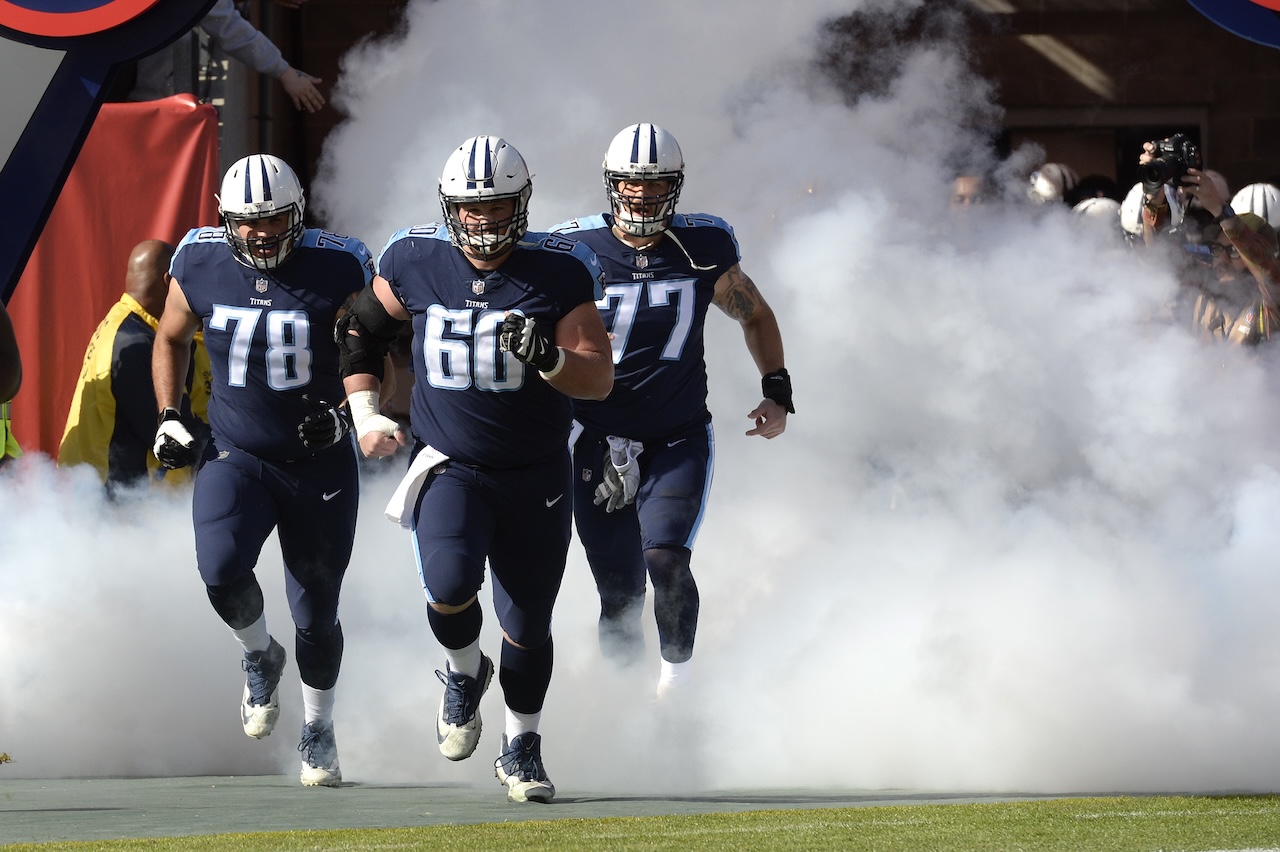
Once a steady strength, tackle has become a regular question mark.
The biggest issues over the 10 seasons looking for replacements started before Conklin left after the 2019 season.
1) The Titans' philosophy under General Manager Jon Robinson was to draft for need and not a best player available approach. That left the offensive line without investment for multiple years. General Manager Ran Carthon invested in the offensive line with first-round selections JC Latham and Peter Skoronski and also spent heavily on center Lloyd Cushenberry.
2) Successful teams draft talent and not just fits for a certain coach. Coaches change, but talented players supersede the need for system turnovers.
3) The Titans have gone through four head coaches since Conklin was drafted, so trying to appease each coach has diluted the talent base at the offensive line position.
4) The lack of vision by the front office and coaching staff in anticipating the departure of Conklin and, eventually, Lewan, who was dealing with major knee issues, was a major setback.
5) Conklin was drafted with the eighth overall pick in 2016. The Titans already had a premier left tackle in Lewan, but felt the need to take a solid right tackle inside the top 10 in the first round to pair with Lewan, who eventually became the highest-paid left tackle in the NFL when he signed his contract. Lewan’s high-dollar contract made is less feasible to invest heavily into the right tackle position, making the Conklin selection only a four-year deal because rarely can a team afford two tackles paid at the top of the OL scale.
Offensive line Draft choices:
2017
Brad Seaton -- Seventh round selection out of Villanova. He was graded as a free agent by all the Titan college scouts but the GM and director of player personnel liked his size and workout and he was drafted. Result: Never played in an NFL game.
Corey Levin – Sixth round selection out of UT Chattanooga. Levin has been a quality backup center and guard. Currently playing for the Atlanta Falcons. Levin has far surpassed his draft value.
2018
No offensive line drafted.
2019
Nate Davis – Third-round selection. Was pretty much a four-year starter, but was not re-signed by the Titans, leaving for the Chicago Bears in free agency. He was cut during the 2024 season and is not on a roster.
2020
Isaiah Wilson – First round selection, 29th overall. Arguably the biggest bust in the first round in NFL history, only playing four snaps, one on field goals and three on kneel downs. This choice was a breakdown in the scouting and roster development process. First issue, Wilson was a right tackle only if he succeeded. He did not have position flexibility. Second, he had major character red flags that the Titans' young college scouts did not find or if they did were largely ignored by the GM and coaching staff. Lastly, Wilson was selected by a need at the position. His lack of consistent production in college, character issues and lack of love for the game were all red flags.
2021
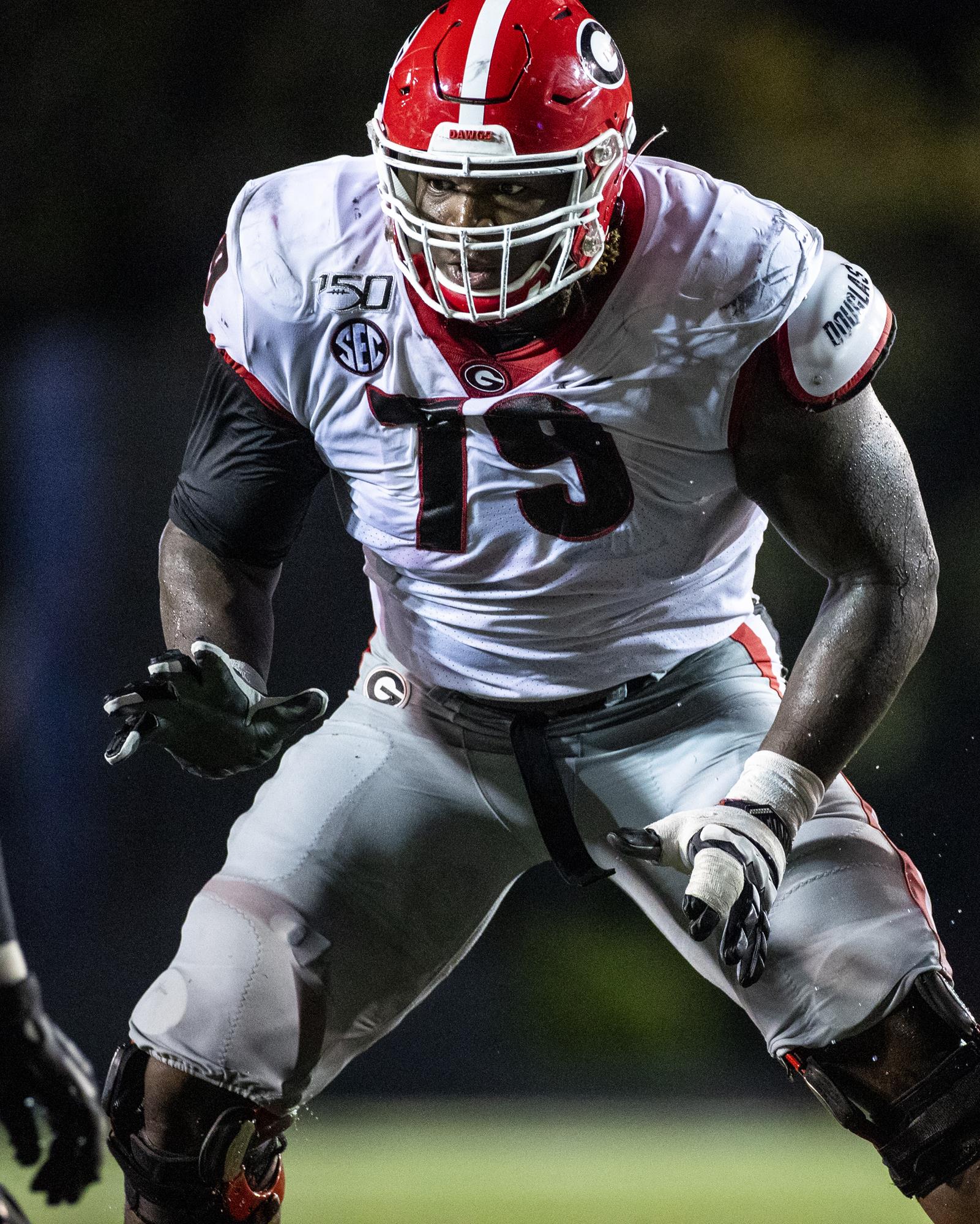
Dillon Radunz -- Second round selection, 53rd overall. Radunz was also a need selection after the failure of Wilson. Radunz was taken to play tackle, but size, arm length, traits and skills all indicated he was an NFL guard, but most likely a backup-level player. After drafting a questionable Wilson, the Titans doubled down with Radunz who also had questions about his position, overall talent and ability to start in the NFL.
2022
Nicholas Petit-Frere – Third round selection, 69th overall. NPF was selected to start at right tackle, but he did not fit the personality the team was trying to invest in. His lack of toughness and physicality was not a fit for a Mike Vrabel-coached team. SO 2020, 2021 and 2022 saw the Titans use a first, second and third round selection on players that did not fit either the culture or physical ability to succeed as a starter. Too many highly valued draft choices were wasted to fit a need.
2023
Peter Skoronski – First round selection, 11th overall. Played tackle in college, but immediately moved into guard and has developed into a high-level NFL starter.
Jaelyn Duncan – Sixth-round selection, forced to play tackle, despite having traits and skills for the guard position. He now plays in the UFL.
John Ojukwu -- College free agent, went from being an undrafted free agent to a starter for tackle-starved Titans. Currently on the Philadelphia Eagles roster.
2024
JC Latham – First round selection, seventh overall. Talented player with outstanding size and natural strength. Despite having an inconsistent career at Alabama as a right tackle starter he was moved to left tackle by the Titans, but that was not a fit mentally or athletically. Latham is a natural right tackle or guard., and was moved back to right tackle in his second year. He should continue to develop at his more natural position in a pivotal year three.
2025
Jackson Slater -- G/C, fifth-round selection who did not play during his rookie season, needs to get some game time to see if he is a potential starter or career backup.
2026
The Titans need to select a tackle, along with a guard and center. There is a major need to invest in the offensive line
Free agent signings:
2018
Josh Kline -- Guard signed to a four- year, $27 million contract. Kline was a backup-level performer signed to a starting salary. Was the weak link of the line during his tenure.
2019
Rodger Saffold -- Four years, $44 million. He Was a quality starter next to Taylor Lewan and Ben Jones.
2020
Dennis Kelly -- Was a good backup-level player who could start for a handful of games.
Ty Sambrailo – Was a solid backup-level player. Ultimately quit.
2021
David Quessenberry, Kendall Lamm -- Veteran backup-level players.
2022
Dennis Daley -- Adequate backup level player who was asked to start.
Jamarco Jones -- Was given two years and five million, but was injured and never performed.
2023
Andre Dillard, Chris Hubbard, Daniel Brunskill -- The tackle signings were poor at crucial positions. This is what happens when the team fails to draft and develop quality players. Brunskill was a solid backup interior player, but he starter for a year. Dillard was over his head as a starter.
2024
Lloyd Cushenberry – High-priced free agent signing at center. Unfortunately, he had a serious Achillies injury that held him back from earning the value of the contract.
Saahdiq Charles, Geron Christian -- Signing to reunite with the OL coach Bill Callahan. Neither made the team with Charles bowing out.
2025
LT Dan Moore Jr – High-priced free agent but only plays at an average NFL level. This season will most likely be his last in Tennessee.
RG Kevin Zeitler -- Older veteran, was signed to a one-year contract. Declining skills made him a one-year fill in. Still potentially a possibility to return.
Blake Hance, Oli Udoh -- Solid back signings on one-year deals.
2026
C/G Austin Schlottmann, G Cordell Volson -- Schlottmann started some in relief a year ago with success. Volson does have starting experience with 48 starts, but missed all of the 2025 season with a shoulder injury.
***
Building a quality offensive line starts with the NFL draft and is supplemented by free agency. A Titan example of how offensive lines should be built can go back to when the Titans first season of 1999 and a decade later, the line maintained its strength and high production.
When I started with the Titans organization in January of 1999. The Titans' offensive line looked like this
LT -- Brad Hopkins, Pro Bowl, 29 yrs old, 1993 1st Round
LG -- Bruce Matthews, Future Hall of famer, 38 yrs old, 1983 1st Round
C -- Kevin Long, 24 yrs old, 1998 seventh rounder
RG -- Benji Olsen. 24 yrs old, 1998 fifth rounder
RT -- Jon Runyan, 26 yrs old, 1996 fourth round, and going into his free agent season
Backups
G -- Zach Piller, 23 yrs old, rookie, third round 1999, future starter in the 2001 season.
T -- Jason Matthews, 28 yrs old, career backup at both tackle and guards
G -- Jason Layman, 26 yrs old, 1996 second round
T -- Scott Sanderson, 1997 third round
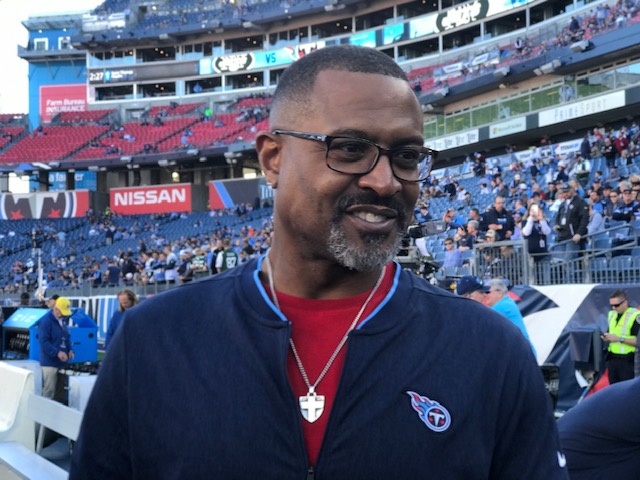
Under General Manager Floyd Reese from 1995 until 2005, the Titans drafted at least one offensive lineman each year and in many drafts two or three. The selection of offensive linemen kept the team from being forced to overpay for free agents. Most of the depth along the line came from the draft, which made for consistent continuity and the ability to allow high priced or aging players leave while having quality replacements already on the roster.
Fred Miller was the only free agent starter brought in during the 1999-2005 seasons. He was signed after Jon Runyan left in free agency and Runyan was signed to the highest offensive line contract at that time.
A good example of drafting the best player available came in the 2005 draft when the Titans selected Michael Roos in the second round, David Stewart in the fourth round and another tackle, Daniel Loper, in the fifth round because he was the highest player on our board.
Roos and Stewart were bookend starting tackles for nine seasons. Loper played in 40 games during his four years with the Titans before signing a contract with Detroit. Loper had a six-year NFL career. We could have drafted any number of positions after selecting Roos and Stewart, but Loper paid dividends because of injuries and need at both the tackle and guard positions which he was capable of playing.
2005 NFL Draft / Round 2 / Pick 41 / LT Michael Roos. #Titans #NFL pic.twitter.com/41eBQuqT5x
— Nick D (@TNFLManDad) January 16, 2024
Stewart retired after the 2013 season, prompting the team to draft Taylor Lewan and starting him at right tackle until Roos retired after the 2014 season, moving Lewan to his natural left tackle position.
During my time with the Titans working under Reese, we drafted offensive line starters Zach Piller, Michael Roos, David Stewart, Leroy Harris, Eugene Amano, Jacob Bell and Justin Hartwig. Roos was the highest selection in the second round, Piller in the third and all the others after the fourth round.
This was a combination of having a GM that valued offensive line play, outstanding development from offensive line coach Mike Munchak and fantastic scouting by a group of very experienced college scouts who could identify players throughout the draft with the ability to start and play multiple positions.
The process of selecting these players started with the college scouts and identifying NFL starting-level physical skills, but also the ability to work and develop their talents. The second part of the process was finding the right fit for the Titans roster at the time. The third part was the development that came from our OL coach.
 Scouting players can be simplified by knowing what the organization is looking for and what the coach likes to work with. I believe the right process starts with an understanding between the scouts and the coaching staff. The coaches need to convey to the scouting staff what type of physical and personality traits they are looking for, and the scout’s job is to go find those type players. The two groups must work together, or the process will not work.
I do believe there should be accountability among scouts and coaches and that can only be achieved if the jobs are clearly defined. Coaches coach and scouts scout. The lines should not get blurred – allow your employees to have accountability within their field of expertise. That doesn’t mean coaches shouldn’t look and evaluate players, but they should do that under a clearly defined rule. What players’ physical or athletic traits stand out to the coach and why? After the coach interviews each player, who do they see fitting in your meeting room? The coach’s information should be cross-checked with the scout’s information and only if they agree should a player be selected.
The scouts are looking for traits and skills and have a vast knowledge of the players’ background after spending so much time on the college campus interviewing their college coaches and watching practice, games, all-star events and the combine. Scouts are evaluators and should never indicate who to play and how they should be developed; that is out of their purview. The biggest mistakes in selecting players during my time in the NFL were when we drafted players for a specific scheme or when only one side (coaches or scouts) liked the player.

Support independent Titans coverage
PaulKuharsky.com is independent Titans coverage supported by readers. Paul has covered this team since 1996 — longer than any active beat reporter.
Full access to every member story, film study, and podcast is $7.50/month or $81/year.